
WaybackWire

The news as it happened.

The Ides of March13 March 44 BCIssue the First

Caesar makes ready to march against the Parthians

Reconstructed from historical sources

Caesar is making ready to leave for the Parthian war within days, and the Senate is called to Pompey’s hall for the Ides amid talk of a crown.
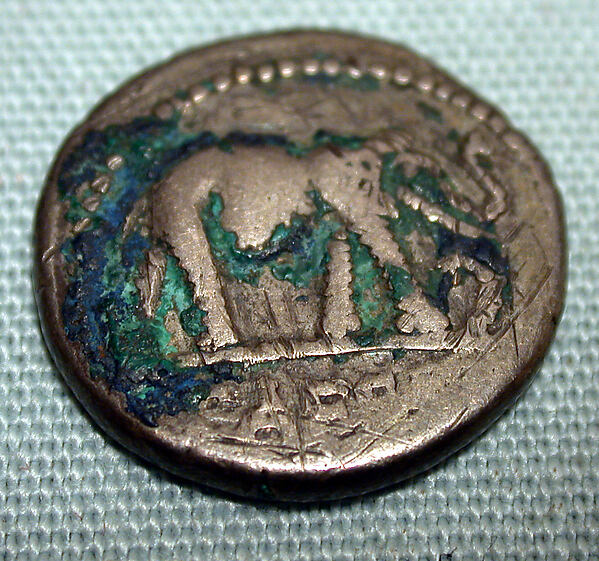
Silver denarius of Julius Caesar, struck four or five years ago: an elephant on one face, priestly emblems on the other. Metropolitan Museum of Art, accession 2021.40.85.
Silver denarius of Julius Caesar, struck four or five years ago: an elephant on one face, priestly emblems on the other. Metropolitan Museum of Art, accession 2021.40.85.Photograph by Roman Republic mint; photograph by the Metropolitan Museum of Art, Dec. 31, 48 BC · Public domain (Met Open Access, CC0)

ROME, the third day before the Ides.—Gaius Julius Caesar is making ready to leave Rome for war in the East, and means to be on the road within days of the Senate meeting he has called for the Ides.

The campaign is to come in two stages. First the dictator will deal with the Dacians, who have overrun Pontus and Thrace. Then he will make war on the Parthians, marching by way of Lesser Armenia.

Against the Parthians he means to go carefully. He will not risk a pitched battle with them until he has first tested how they fight.

The army is already on the move. Troops have been sent ahead across the Adriatic for what is to be a long campaign, and Caesar himself is in haste to be gone from the city.

In Rome the preparations are in hand and the day of his going is fixed. A long programme of public works is to go forward at home while he is away.

Suetonius, Divus Julius (Loeb, tr. Rolfe, 1914) · Appian, Civil Wars book 2 (tr. Horace White, 1899) · Appian, Civil Wars book 2 (tr. Horace White, 1899) · Plutarch, Life of Caesar (Loeb, tr. Perrin, 1919).

Canals, harbours and a new temple: the works Caesar leaves in hand

Reconstructed from historical sources

ROME, the third day before the Ides.—Caesar goes east leaving a long list of public works in hand at home, and the preparations for them are already under way.

The greatest are works of water and road. A canal is to be cut through the Isthmus of Corinth, and the task has already been given to Anienus. The Tiber is to have a new channel below the city, running to the sea at Terracina, and Ostia is to get new harbours. The Pomptine marshes are to be drained, and Lake Fucinus with them, and a road is to be carried over the Apennines.

In the city itself he plans a temple of Mars larger than any in the world, and a great theatre under the Tarpeian Rock.

Nor are law and letters forgotten. The civil law is to be brought together into a single digest, and Rome is to have public libraries, with Marcus Varro in charge of gathering the books.

Plutarch, Life of Caesar (Loeb, tr. Perrin, 1919) · Suetonius, Divus Julius (Loeb, tr. Rolfe, 1914).

Senate called to Pompey’s hall for the Ides, amid talk of a crown

Reconstructed from historical sources

ROME, the third day before the Ides.—The Senate is to meet on the Ides in the hall attached to Pompey’s theatre, where the statue of Pompey stands. Caesar himself fixed the day, and the senators are to gather first in the portico.

In the Forum the talk is of what may come before them. A proposal is said to be on its way from the Fifteen, the priests who keep the books of fate, and Lucius Cotta is to announce it: that since the books say the Parthians can be conquered only by a king, Caesar should be given that title.

A second report is going the rounds with it, that the dictator means to move to Alexandria or Troy and take the wealth of the empire with him.

Talk of a king has followed Caesar all winter, since the affairs of the diadem at the Latin Festival and the Lupercalia.

Caesar has answered it before. When the people hailed him as king, he told them: “I am Caesar and no king.”

Nicolaus of Damascus (tr. C. M. Hall, 1923) · Suetonius, Divus Julius (Loeb, tr. Rolfe, 1914).

Night writings on the chair of the praetor Brutus

Reconstructed from historical sources

ROME, the third day before the Ides.—Writings left by night have been found on the tribunal and the chair of the praetor Marcus Brutus. No one has put a name to them. They read: “Thou art asleep, Brutus,” and “Thou art not Brutus.”

Caesar has stood by the praetor. When men came to him with charges against Brutus, he answered that Brutus deserved to rule for his virtue, and would not turn ingrate.

When Antony and Dolabella were denounced to him, the dictator answered: “I am not much in fear of these fat, long-haired fellows, but rather of those pale, thin ones.”

Plutarch, Life of Caesar (Loeb, tr. Perrin, 1919).

Caesar refuses a guard

ROME, the third day before the Ides.—Caesar goes about the city without a bodyguard. His friends have urged him to take one, and many have offered to serve, but he will not hear of it. In his view “it was better to die once for all than to be always expecting death”.

Plutarch, Life of Caesar (Loeb, tr. Perrin, 1919).

The dictator’s offices

ROME, the third day before the Ides.—As he makes ready to leave for the East, Caesar holds the dictatorship for life and has been proclaimed Father of his Country. He enjoys a tribune’s immunity, and the Senate has voted him an unusually large set of honours in a single day.

Cassius Dio, Roman History book 44 (Loeb, tr. Cary, 1917) · Appian, Civil Wars book 2 (tr. Horace White, 1899).

A soothsayer’s warning

ROME, the third day before the Ides.—The soothsayer Spurinna has told Caesar to “beware of danger, which would come not later than the Ides of March”.

Suetonius, Divus Julius (Loeb, tr. Rolfe, 1914).

Start The Ides of March from issue one tomorrow

Wayback Wire · No. 1 · 13 March 44 BC